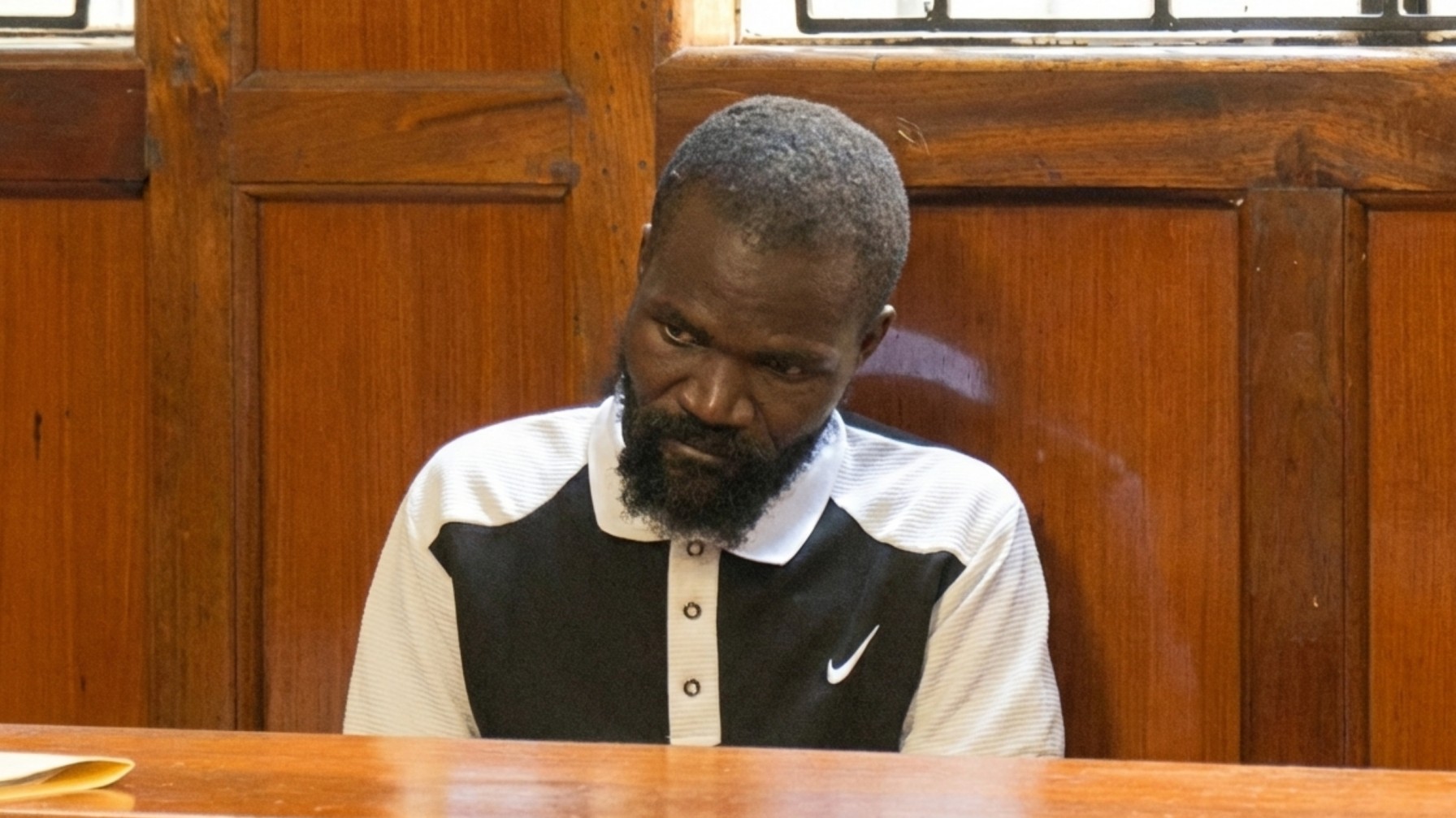
A Nairobi court has cleared political activist Nuru Okanga Maloba of all charges related to the alleged online publication of false information, ruling that the prosecution failed to present sufficient evidence to support the case.
Delivering the verdict on Tuesday, January 20, 2026, the court found that the evidence against Okanga did not meet the legal requirements needed to sustain the three counts under the Computer Misuse and Cybercrimes Act.
“Upon consideration of all the evidence and applicable law, this court finds that the prosecution has failed to establish a prima facie case against the accused person in respect to all the three counts,” Magistrate Rose Ndombi said.
The ruling highlighted that while the content of the video in question was serious, investigators could not prove that Okanga had created, uploaded, or shared it, nor that it had the potential to incite public disorder or violence.
The magistrate added that the prosecution’s case relied largely on “suspicion and conjecture,” which is insufficient for a criminal conviction.
“Pursuant to Section 210 of the Criminal Procedure Code, this court finds that the accused, Nuru Okanga Maloba, has no case to answer. He is hereby acquitted of all three counts forthwith unless otherwise lawfully held,” the court confirmed.
Okanga faced charges for allegedly posting the video through social media accounts, including “Riba News” and “Siasa TV KE Backup.” Constable Milton Mwanzi of the DCI Serious Crime Unit testified that he arrested Okanga in June 2024 at a barbershop and handed him over to investigators.
During cross-examination, Mwanzi admitted that he lacked a court order to monitor Okanga’s movements or search his premises. He also confirmed that no electronic devices were seized, and no digital forensic evidence linked Okanga to the online content.
Mwanzi further acknowledged that he was not trained in digital forensics and could not verify whether the video was altered.
Other prosecution witnesses, including an investigator and a communications expert, similarly conceded that they could not authenticate the video or prove Okanga’s involvement in its dissemination.
Defence lawyer Babu Owino argued that without search warrants, seized devices, or verified digital evidence, the charges could not legally stand.
He stressed that the law requires proof of authorship, publication, and dissemination, none of which were established in this case.
The court agreed, pointing out that these evidentiary gaps undermined the entire case, leading to Okanga’s acquittal.































Comments
Sign in with Google to comment, reply, and like comments.
Continue with Google